Showing posts with label Brazil. Show all posts

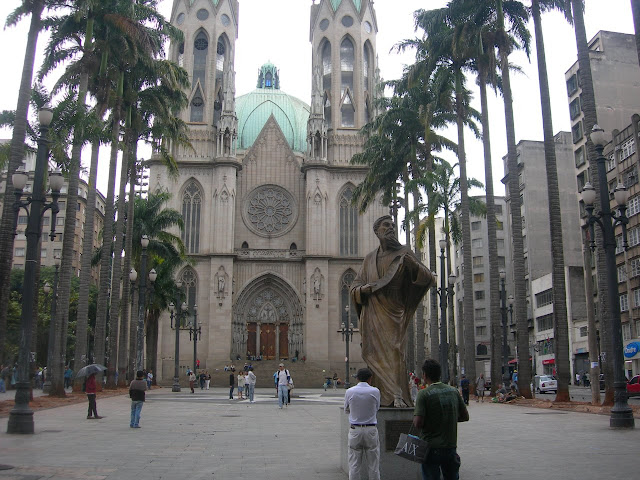
Sao Paulo - Brazil

São Paulo is the largest city in Brazil, the largest city in the southern hemisphere, and the world's eighth largest city by population. The metropolis is anchor to the São Paulo metropolitan area, ranked as the second-most populous metropolitan area in the Americas and among the five-largest metropolitan areas on the planet. São Paulo is the capital of the state of São Paulo, the most populous Brazilian state and exerts strong regional influence in commerce and finance as well as arts and entertainment. São Paulo maintains strong international influence and is considered an Alpha – World City. The name of the city honors Saint Paul.

The metropolis has significant influence nationally and internationally, in terms of culture, economy and politics. It houses several important monuments, parks and museums such as the Latin American Memorial, the Museum of the Portuguese Language, São Paulo Museum of Art, the Ibirapuera Park and the Paulista Avenue, which is the most important financial center of São Paulo. The city holds many high profile events, like the São Paulo Art Biennial, the Brazil Grand Prix Formula 1 Sao Paulo, Sao Paulo Fashion Week, and the São Paulo Indy 300.

Read more about this: http://en.wikipedia.org/wiki/S%C3%A3o_Paulo

Sao Paulo, Brazil
Sao Paulo, Brazil

Paraty - Brazil

Paraty (or Parati) is a preserved Portuguese colonial (1500-1822) and Brazilian Imperial (1822–1889) town with a population of about 36,000. It is located on the Costa Verde (Green Coast), a lush, green corridor that runs along the coastline of the state of Rio de Janeiro, in Brazil. Paraty has become a popular tourist area in recent years, renowned for the historic town and the coast and mountains in the region.

The town is located on the Bay of Ilha Grande, which is dotted with many tropical islands. Rising up as high as 1,300 meters behind the town are tropical forests, mountains, and waterfalls. It is the southernmost and westernmost city in Rio de Janeiro state. Paraty is surrounded by many parks and nature preserves, including Serra da Bocaina National Park, Serra do Mar State Park (of São Paulo), the Park Reserve of Joatinga and the Cairuçu Environmental Protection Area, where the village of Trindade is located. The municipality also includes an indigenous village and an Afro-Brazilian quilombo.

Read more about this: http://en.wikipedia.org/wiki/Paraty

Trindade district
Trindade district

Rio de Janeiro - Brazil

Rio de Janeiro, commonly referred to simply as Rio, is the capital city of the State of Rio de Janeiro, the second largest city of Brazil, and the third largest metropolitan area and agglomeration in South America, boasting approximately 6.3 million people within the city proper, making it the 6th largest in the Americas, and 26th in the world. The city was the capital of Brazil for nearly two centuries, from 1763 to 1815 during the Portuguese colonial era, 1815 to 1821 as the capital of the United Kingdom of Portugal, Brazil and Algarves, 1822 to 1960 as an independent nation. Rio is nicknamed the Cidade Maravilhosa or "Marvelous City".

Rio de Janeiro represents the second largest GDP in the country[6] (and 30th largest in the world in 2008[7]), estimated at about 343 billion reais (IBGE/2008) (nearly US$201 billion), and is the headquarters of two major Brazilian companies – Petrobras and Vale, and major oil companies and telephony in Brazil, besides the largest conglomerate of media and communications companies in Latin America, the Globo Organizations. The home of many universities and institutes, it is the second largest center of research and development in Brazil, accounting for 17% of national scientific production – according to 2005 data.

Read more about this: url

Rio de Janeiro - Brazil

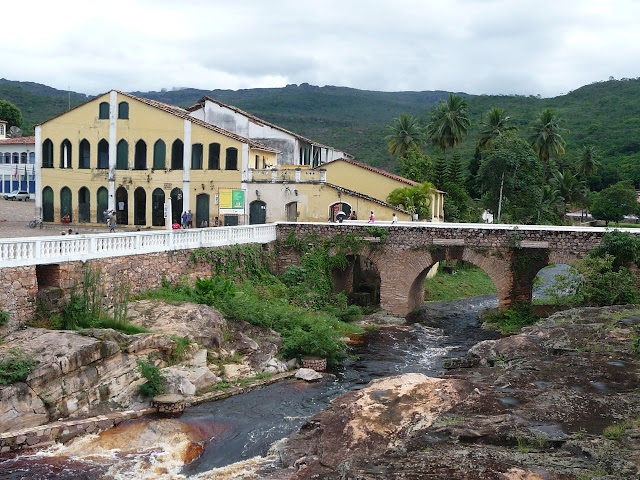
Lençóis - Bahia

Lençois is a small community of some 13,200 inhabitants nestled in the foothills of the Chapada Diamantina (a mountainous area in central Bahia, so called because it was the scene of extensive diamond mining during the 19th century) and located 410 kilometers to the west of Salvador. The chapada itself is an area of stunning beauty, of ancient, majestic, august and awe-inspiring mountains, mesas and precipices...a landscape provoking existential wonder and where a from-the-heavens rendition of the opening to Also Sprach Zarathustra would almost seem natural and expected.

The name "Lençois" means "sheets" and there are two theories as to the name's origin. One is that the tents of the garimpeiros (prospectors) were stretched out in such quantities that viewed from above they looked like sheets. The other is that the name arose from the broad sheets of rock that make up the bed of the extremely shallow Rio Lençois (Lençois River). The colonial architecture of the town has come under the protection of Brazil's federal government and the town retains its real-life character. It (together with the surrounding area) has also come to draw visitors (Brazilian and international) and an infrastructure of numerous and varied restaurants and hotels and pousadas has arisen to serve travellers' needs.

Read more about this: http://www.bahia-online.net/lencois.htm

Lençois, Bahia
Lençois, Bahia

Salvador, Bahia - Brazil

Salvador is the largest city on the northeast coast of Brazil and the capital of the Northeastern Brazilian state of Bahia. Salvador is also known as Brazil's capital of happiness due to its easygoing population and countless popular outdoor parties, including its street carnival. The first colonial capital of Brazil, the city is one of the oldest in the country and in the New World. For a long time, it was simply known as Bahia, and appears under that name (or as Salvador da Bahia, Salvador of Bahia so as to differentiate it from other Brazilian cities of the same name) on many maps and books from before the mid-20th century. Salvador is the third most populous Brazilian city, after São Paulo and Rio de Janeiro.

The city of Salvador is notable in Brazil for its cuisine, music and architecture, and its metropolitan area is the wealthiest in Brazil's Northeast. The African influence in many cultural aspects of the city makes it the center of Afro-Brazilian culture and this reflects in turn a curious situation in which African-associated cultural practices are celebrated. The historical center of Salvador, frequently called the Pelourinho, is renowned for its Portuguese colonial architecture with historical monuments dating from the 17th through the 19th centuries and has been declared a World Heritage Site by UNESCO in 1985.

Read more about this: http://en.wikipedia.org/wiki/Salvador,_Bahia

Sunset and the Atlantic Ocean

Foz do Iguaçu - Brazil

Foz do Iguaçu is the 4th largest city in Paraná state, Brazil and the 11th largest in the Brazil's Southern region, with a population of 325,137 inhabitants. It is located approximately 650 km (400 mi) west of Curitiba, Parana's capital city, being the westernmost city in that state. The inhabitants of the city are known as iguaçuenses.

The city is one of Brazil's most-frequented tourist destinations. Most tourists are Brazilians and Argentines, but Canadians, Americans, British, Germans, Italians, French, Portuguese, Spanish, Korean, Japanese and Chinese tourists are also numerous. The city has about 100 hotels and inns. Its main attractions are:

Read more about this: http://en.wikipedia.org/wiki/Foz_do_Igua%C3%A7u

The Iguaçu falls, viewed from Argentina

Pantanal - Brazil

The Pantanal is a tropical wetland and one of the world's largest wetland of any kind. 80% of it lies within the Brazilian state of Mato Grosso do Sul but extends into Mato Grosso as well as into portions of Bolivia and Paraguay, sprawling over an area estimated at between 140,000 square kilometres (54,000 sq mi) and 195,000 square kilometres (75,000 sq mi). Various sub-regional ecosystems exist, each with distinct hydrological, geological and ecological characteristics; up to twelve of them have been defined (RADAMBRASIL 1982). 80% of the Pantanal floodplains are submerged during the rainy seasons, nurturing an astonishing biologically diverse collection of aquatic plants and helping support a dense array of animal species. The name "Pantanal" comes from the Portuguese word pântano, meaning wetland, bog, swamp or marsh. By comparison, the Brazilian highlands are locally referred to as the planalto, plateau or, literally, high plain.

"The Pantanal is a huge gently-sloped basin that receives runoff from the upland areas (the Planalto highlands) and slowly releases the water through the Paraguay River and tributaries. The formation is a result of the large concave pre-Andean depression of the earth's crust, related to the Andean orogeny of the Tertiary. It constitutes an enormous internal river delta, in which several rivers flowing from the surrounding plateau merge, depositing their sediments and erosion residues, which have been filling, throughout the years, the large depression area of the Pantanal. This area is also one of the distinct physiographic provinces of the larger Parana-Paraguay Plain area.[citation needed]
"

Read more about this: http://en.wikipedia.org/wiki/Pantanal

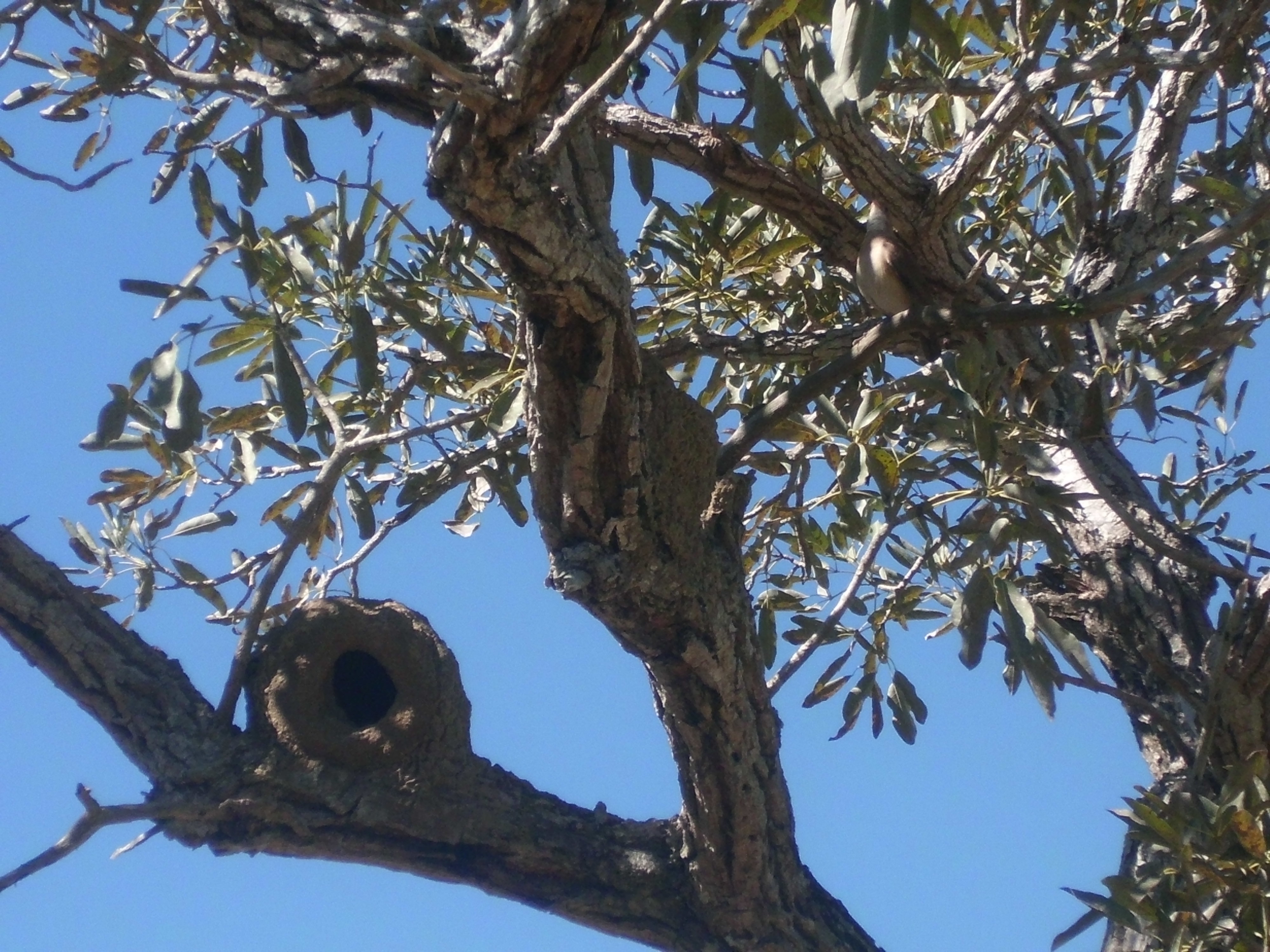
Pantanal de Mato Grosso